eFPGAs are coming of age

Last month, I did a post entitled “There’s a lot happening on the FPGA front.” As a shop that does an extensive amount of work with FPGAs, we’re always interested to hear talk about even more stuff happening. So of course, I noticed a recent article by Tim Saxe, “Embedded programmability finds sweet spot in IoT,” on EE Times, which discusses the role that eFPGAs (embedded FPGAs) are playing with respect to embedded programming in IoT devices.

Tim’s article addresses the age-old trade-offs that developers have been faced with when it comes to cost, flexibility, and power consumption. The main thing he comes away with is that, for the IoT, FPGAs are the way to go.

Here’s how he gets there:

On the cost side, FPGAs are getting cheaper. (This was one of the issues covered in our recent post.) This is a good thing, given that the IoT market continues to be dominated by consumer application and is, thus, very price sensitive. IoT devices are also power-consumption sensitive. No one wants to be perpetually changing or charging batteries. But it’s the growing need for flexibility that’s pushing the IoT world towards FPGAs. Until the relatively recent proliferation of IoT devices, the products that were driving the semi-conductor industry were smartphones, tablets and other devices that are pretty standardized. But IoT devices are anything but standard. They’re all over the map:

The emergence of the IoT as the next wave of growth for consumer electronics comes with a demand for higher device flexibility, as these applications are much more fragmented and difficult to predict….[This market] with its associated fragmented application space and low cost and power requirements — has engendered a need for highly flexible devices that have a low per-unit cost and consume little power.

Embedded processors could do the trick for SoCs, since they provide flexibility by having “the highly desirable attribute of being software programmable.” On the downside, they consume a lot or power “as much as five to ten times the power of hardware-based solutions when these are possible.”

The logical solution is embedded FPGA (eFPGA) technology. The cost of programmable logic transistors and gates has fallen to the point whereby they can be added to an SoC without a noticeable increase in die size…Having hardware programmability allows SoC developers to address a broad range of IoT application needs without having to create separate devices for each one. It also allows designs to tackle problems that previously required a processor (or a larger processor) while reducing power and potentially even increasing performance. Emerging and/or rapidly evolving market requirements can easily be addressed, thereby eliminating the need to predict the functionality requirements for a device that can only be economically iterated every few years.

At Critical Link, we’re focused primarily on work in the scientific, industrial, defense, and other non-consumer spheres, which tend to demand a high degree of flexibility. But the issues of power consumption and cost always pertain. So it was interesting to read Tim Saxe’s riff on eFPGA’s “coming of age.”


The source for the image used here is Cal Poly.
The new Industrial Internet Connectivity Framework

It’s probably safe to say that most apps being developed these days are connected – they’re part of the Internet of Things. To some extent, a lot of IoT development has been the Wild West in terms of how to go about it, with not all that much attention being paid to standards. This was especially true on the lower, more consumer-oriented part of the market. A case in point was featured in a recent article I saw in The Wall Street Journal that described how a security video recording in a Colorado laundromat was hacked and spreading malware. The hacking was actually pretty easy, as the “security” password had been reset to 123456. Nah, no one would ever think of that. (At least it’s marginally stronger than “password.”)

On the higher-end industrial IoT side of the house, things have tended to be more rigorous and robust.

Part of the credit goes to the Industrial Internet Consortium, “a global, member-supported, organization that promotes the accelerated growth of the Industrial Internet of Things by coordinating ecosystem initiatives to securely connect, control and integrate assets and systems of assets with people, processes and data using common architectures, interoperability and open standards to deliver transformational business and societal outcomes across industries and public infrastructure.”

Okay. That’s a mouthful.

The bottom line: they come up with standards for developers to follow.

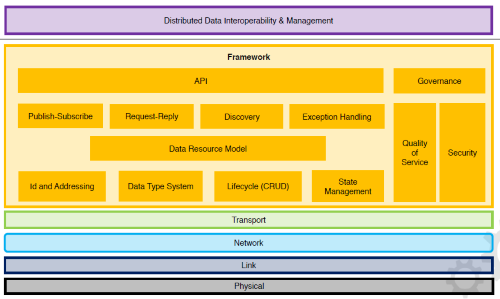
A few weeks ago, Rick Merritt over on EE Times wrote about their latest offering, the Industrial Internet of Things Connectivity Framework, which Rick has dubbed “a kind of decoder ring for an alphabet soup of communications-software components.” Here’s the schematic for the connectivity framework layer functions:

Here’s the list/links of the IIC’s technical papers, including their new connectivity framework:

If you’re developing industrial IoT applications, the work of the IIC is definitely worth checking out.

There’s a lot happening on the FPGA front

It was the title of the article on EE Journal that caught my eye: “FPGAs Race for the Bottom,” which rounds up recent FPGA releases. Writer Kevin Morris claims this occur when the “bleary eyed marketing machines” who’ve been hyping technologies that are (perhaps) more exciting wake up and realize, “’Oh, yeah – we should do something about the FPGAs almost everybody actually USES as well.’ And then we start talking about ‘cost-optimized portfolios.’”

Morris then starts his roundup with a mention of a not-so-recent announcement from Xilinx, which in September unveiled a portfolio that included updates to their Spartan, Artix, and Zync families. (Xilinx is a long-term Critical Link partner. Our MityDSP-L138F uses a Spartan-6, as does the MitySOM-1808F.)

Next up, he talked about Intel’s additions to their Cyclone line. I still find myself a bit startled when I see Intel’s name in there, as I still think of their FPGA business as Altera, which was acquired by Intel a bit over a year ago. Like Xilinx, Altera is a partner, and the Cyclone V is part of our MitySOM-5CSx. The overall theme of the article is, as tends to happen with technology (think Moore’s Law), more bang for the buck. In the world of FPGA, speed is increasing, power consumption improving, and costs decreasing.
On the performance front, Intel is claiming 300MHz core performance for the Cyclone 10 logic fabric, and they are including up to 384 DSP blocks with 18×19 multipliers and hardened floating point. Memory resources include up to 588 memory blocks with up to 11,760 Kbits of storage, plus up to 1,800 Kbits distributed RAM.

Pretty impressive stuff!

The final vendor covered in the article is Microsemi, which introduced their PolarFire FPGAs. Microsemi’s FPGA focus has historically been the “high-reliability military/aerospace market.” They’re now coming into the lower end market, and will be going toe-to-toe with Xilinx and Altera, I mean Intel.

PolarFire is a non-volatile, flash-based FPGA. That brings some nice advantages in the low-cost market, including removing the need for external configuration circuitry, improving security, reducing startup time, improving low-power standby mode, and reducing power consumption.

The article goes into a lot of detail on the different FPGAs, and is definitely worth a read. There’s also a pretty lively commenting section that you’ll want to look at while you’re there.

The bottom line is that, with these announcements, there’s a lot more on offer in the cost-optimized FPGA market. Which is especially exciting here at Critical Link, as we are sure to be working with most – if not all – of these devices on one project or another soon.

As Morris concludes,

It is, apparently, a great time to be designing with FPGAs.

Hey, it’s always been a great time to be designing with FPGAs.


Proving the case for arson by evaluating pacemaker data

Like a lot of folks, I’m a fan of shows like CSI and NCIS, which demonstrate the ways that forensic technology can be used to solve crimes. I know that what’s portrayed may not be 100% realistic in terms of how simple it all seems, but it’s all very interesting – especially given that Critical Link has done some work with devices used for forensic analysis. Of course, as technology continues to improve and become more ubiquitous, it’s easy to see the increasing role that things like EZ-Pass data, smartphone GPS tracking, and personal wearables will play when it comes to mystery solving. (Not to mention the sometimes ludicrous ways in which nitwit criminals are apprehended because they posted an online video of themselves in the midst of committing a crime.)

Anyway, a recent article in Fortune on one particular instance of crime-solving technology definitely caught my eye.

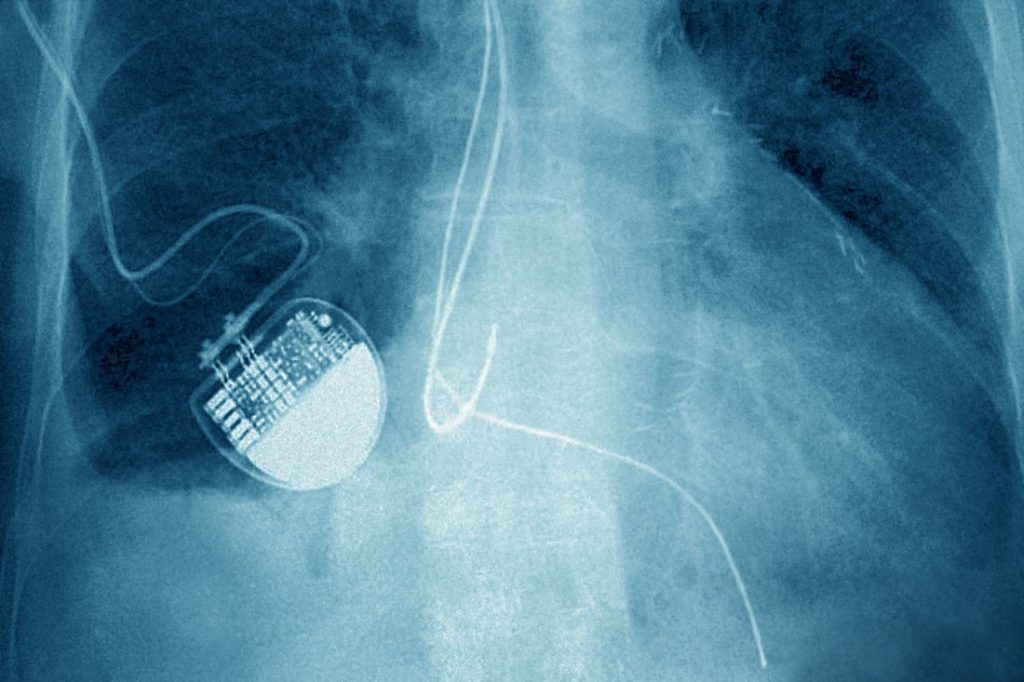
It seems that there’s a news story from Ohio about how data from a cardiac pacemaker is being used to prosecute an arson case. After a suspicious fire in his home last fall, Ross Compton is now facing felony charges of aggravated arson and insurance fraud. Compton uses a pacemaker,

“…which police mined for data to help determine whether he took items from the home and tossed them out a window during the fire, as he’s claimed. A cardiologist who reviewed his heart rate and cardiac rhythms for signs of exertion when he raced to save his belongings, has said that his version of events during the fire are “highly improbable,” according to the Associated Press.”

There was other evidence that pointed to Compton’s culpability – like gasoline on his shoes and clothing. But the information captured on the pacemaker played an important role in the investigation.  According to Compton, once the fire started, he was able to gather up all sorts of things in his home that he wanted saved, pack them in a suitcase, and toss them out the window. This sounded a little fishy, of course. If your house is on fire, most people would think of getting out, not packing a suitcase. But the doctor who looked at the pacemaker data didn’t see any evidence of such a mad packing scramble – under the stress of your house burning down – could feasibly have occurred.

We will, of course, see more and more of this, as more of us become armed with medical or wellness devices that keep track of all sorts of things. Think about it. You could tell the police that you were home in bed sleeping. Your Fitbit might report that, between 2 a.m. and 3 a.m., you got in 4,000 of your daily paces – enough to get you to the robbery scene and back to bed.

One of the issues that the arson case brings up is that of privacy. With all of this real-time, moment-to-moment health data available, what happens to patient privacy? It’s not just an issue as it relates to law enforcement, but as it relates to things like health insurance, to accessing employee data, and other areas where, up until now, it’s been a simpler matter to retain some privacy rights.

Privacy issues aside, the story about the alleged pacemaker-wearing arsonist sure was interesting. Compton is scheduled to be back in court soon, so we’ll see how this forensic evidence will be used. What saved his life may end up putting him in prison. What a trade-off!

Chip news, from NASA and Intel

When it came to chips, last week was a big one for news.

First, we learned that NASA has produced a new chip that will be able to withstand the extreme conditions on Venus.

NASA researchers developed a new computer chip and tested it without any cooling or protective packaging in a high-pressure, high-temperature environment like the surface of Venus—and it worked. Humans haven’t sent a lander to Venus since 1982 (that Russian lander lasted just over two hours) although NASA could launch a rover in 2023, according to Forbes. That visit won’t happen unless NASA has a computer chip that can withstand the planet’s 800-plus degree Fahrenheit environment. (Source: Gizmodo)

The chip withstood high-temperature conditions for three weeks, but would probably have lasted long. Three weeks was as long as NASA’s Glenn Extreme Environments Rig (GEER) the “toxic high pressure cooker that can recreate Venus’ atmosphere” runs before it needs to be shut down for some R&R. (This is what the chip looked like when it was cooking in GEER. Wouldn’t want to touch that surface!)

For those of us who grew up interested in space exploration (i.e., pretty much every engineer that I know), the idea of exploring Venus for longer than the Russians could do in 1982 is an exciting one. There’s much to be learned from any planet. For Venus, “its geological processes and greenhouse gas-loaded atmosphere could help us better understand processes on our own planet.”

Because of the way that silicon would reacts to high temps, silicon could not be used. Instead, the NASA chips used silicon carbide. The interconnects used tantalum silicide so that they wouldn’t have a meltdown.

It’s going to be a while until the chips needed to support a Venus landing are perfected. The one that’s been tested has 24 transistors. Compare that to a transistor count of more than 7.2 billion for one of Intel’s single-chip processors.

And speaking of Intel, the other chip news of the week was Intel’s decision to go through with plans to build a new chip factor in Arizona.

The plant will build ultradense chips that Intel refers to as seven nanometer, with transistors packed more closely together than in the chips the company now builds. The tighter spacing allows for faster, more energy-efficient chips. “This factory will produce the most powerful computer chips on the planet,” [Intel CEO Brian] Krzanich said. (Source: NY Times)

While the chips that Intel is producing will be plenty powerful, they won’t be able to withstand the high temperatures that the NASA chips do. Of course, they won’t have to. The Intel chips will be powering servers, personal computers, and IoT devices. If the temperatures around any of those items reaches 800-plus degrees Fahrenheit, there’ll be bigger problems to worry about than whether the device is going to fry!


GotProduce?’s got plenty of technology in their hydroponic systems

At one point or another, most of us – in search of a tasty tomato in the dead of winter, or a head of Bibb lettuce for a salad – have picked up some hydroponic produce at the grocery store. I take it that there’s some back and forth about whether hydroponically-grown fruit and vegetables are as nutritious as the soil-grown versions. But whatever side someone comes down to in that debate, hydroponics seems to bring with it a number of important environmental and other benefits:

  • It uses less water than traditional agriculture
  • It has a far shorter growing season
  • Growing doesn’t require the use of herbicides and pesticides
  • Food can be grown year-round, making fresh product more readily available
  • For the size of the footprint, the yield is greater than with land-based growing
  • Food can be produced locally, saving on transportation costs

Like much of today’s agriculture, hydroponics relies on technology. (We’ve posted about the use of technology in agriculture in the past in The Internet of Tomatoes and in Robotic Milking (Yes, Technology Is Everywhere).) One company that’s involved in hydroponics – and which makes greenhouses that are highly-evolved solution from the technology perspective –  is GotProduce?, which focuses primarily on developing countries, especially those that are most susceptible to drought.

GotProduce? systems are “smart”, full of all sorts of technology to help ensure that growers succeed. For one thing, t
hey come pre-programmed for the specific location and crops, taking guesswork and trial and error out of the farming equation.

Each greenhouse is equipped with a Linux controller running on its own LAN. Wireless sensors – some of which are DSP-based –  monitor all the environmental factors: pH, EC, temp, water level, light, Rh… The control interface displays data on all the parameters being monitored, controls irrigation, fertigation injectors (fertilizing through the watering system), pumps, and all the sensors. It also handles alerts/alarms, maintenance reminders, etc.

The data sync back to the cloud via ISP modem. There the greenhouse data are stored, enabling GotProduce? to check on greenhouse conditions remotely. Interestingly, GotProduce will be moving away from stationary sensors entirely and moving towards the use of drones to take readings from all points in the greenhouse. Because the greenhouses are enclosed, there’s no issue with regulatory policies that govern the use of drones flying outdoors.

Always interesting to learn about how technology is being deployed in so many ways we may not think about on a day-to-day basis. Next time I pick up a hydroponically grown tomato, I’ll have new respect for it!

Emerging Technologies for 2017 – Part Two

Earlier this month I had a post that covered half of the hot technology predictions from EDN and EE Times editors as featured on embedded.com. Here’s the second half of what the EDN and EE Times pundits see on the horizon for 2017.

Industrial IoT to gain traction in 2017 (Richard Quinnell) As we’re all aware, much of the hype around the Internet of Things has been around consumer products, but Rich believes that this could be the year when the companies begin to adopt the Industrial IoT (IIoT). “In its broadest vision, the IIoT would allow companies to have their full manufacturing, chemical processing, materials handling line, and the like, fully instrumented and controlled via network-based operations. “Full” in such cases, not only encompasses specific plants or factories, it includes the facilities of all an enterprise’s suppliers so that the entire “food chain” for an industrial activity can be linked.” This won’t happen overnight, but it’s coming (and we’ve seen it starting to happen in the applications some of our clients have deployed).
Technology looking to improve the human condition (Michael Dunn). Michael’s got his eye on medical electronics, which will certainly be more likely to improve the human condition than being able to ask Siri where the closest pizza parlor is. He’s especially interested in the winner of the Qualcomm Tricorder XPRIZE, which has seven finalists with devices “capable of continuously reading five vital signs and diagnosing 13 conditions without the help of a physician.” The winner will be announced in early 2017. Stay tuned. He’s also looking at Watson to keep doing more with respect to healthcare, at wearable sensors to “continue to expand their repertoire,” and “as the medical/fitness market grows, emphasis toward smaller, lighter, cheaper, lower-power designs will push IC makers to increase integration and application-specific development.”

Bi-directional DC/DC power supplies: Which way do we go? (Steve Taranovich) This isn’t a new technology, but more apps are on the horizon that “require better energy efficiency and such systems as green power with solar or wind generation, need storage so that when there is no wind or sun available the electricity flow is not interrupted.” EV/HEV hybrid vehicles also need bi-directional DC/DC conversion to handle dual-voltage systems with 48V and 12V batteries.

Sensor conditioning amidst a sea of focus on MEMS and sensors (Steve Taranovich) As Steve reminds us, behind every IoT application and that astronomical number of MEMS and sensors that will be part of it, there has to be “proper signal conditioning at the MEMS/sensor interface.” Failing that, the data being sent to the processor will be pretty much useless. To keep this from happening, “circuit designers will need good tools” that will integrate ICs into a sensor conditioning front end. There’ll also be a need for linearization and calibration circuits, as well as design and conditioning support for human-machine interfaces. Then there is the demand that will come from the sensors used in autonomous vehicles.

The Future of 3D Printing Starts with Business (Hailey Lynne McKeefry) Is this the year when we start to see the promise of 3D technology being fulfilled? Hailey has looked at some new research, and spoken to those who know the market, and thinks this may well be the case. This may be the year in which it starts moving from prototyping to actual end-user products. Gartner predicts that, “by 2018, almost 50% of consumer, heavy industry and life sciences manufacturers will use 3D printing to produce parts for the items they consume, sell or service.” Okay, so maybe this isn’t the year. Maybe 2018 is.

Lots of interesting things happening out there!


Emerging Technologies for 2017 – Part One

As a new year begins, I always like to take a look at what the pundits are predicting for technology trends in the upcoming year. On embedded.com, EDN and EE Times editors – a.k.a. the pundits – weighed in with their 2017 predictions for hot technologies, each of which gets a full article of its own devoted to it. (Note to the readers: the articles are well worth a look if you’re at all interested in the topic. They contain technical detail, illustrations, and, in some cases, schematics.) In this post, I’m focusing on the first five technologies discussed.

RF energy: Measurements improve cooking, lighting, and-more (Martin Rowe):  There are many different applications for RF energy, which is “made possible through the development of RF transistors that can provide sufficient power at the right frequencies, namely the 2.45 GHz ISM band.” The application that Martin explores is microwave cooking, where RF energy, with its closed-loop approach, will produce more even cooking than today. This will require the use of sensors that can measure changes to food as it cooks.

Microphones: A sound technology choice for communication and control (Steve Taranovich) Steve’s betting that, despite the hold that e-mail and texting have on the way we communicate technically today, speech is our natural medium. So “voice will win out in the end” as the way humans interact with and control a world that technology just keeps making smarter. In his article, Steve runs through a number of the microphone technologies he’s seen or read about that he sees will take off. “Even ribbon microphones, an older technology from 1924, are making a comeback with advanced phantom-powered FET stages for professional audio processing.” 1924! Talk about back to the future!

Digital Clothes: Not Putting You On (Rick Merritt) I’m all for improving microwave cooking, and bring on those improved microphones, but I’m not quite ready to start wearing digital clothing. At least I don’t think I am. But, hey, if conductive yarns and “flexible components, batteries, and substrates to replace rigid printed circuit boards” become more available, maybe I’ll be happy to find an intelligent shirt under the tree in a few years. You never know.

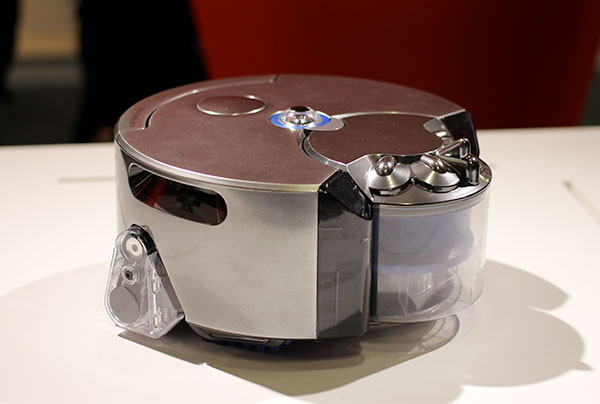
Appliance autonomy promises life simplicity (Brian Dipert) Brian has been using robotic vacuum cleaners for a while, and happily reports that the latest gen models have embedded vision processing to solve issues like getting stuck under the couch. It’s not just vacuum cleaners that are getting smarter. There are gutter cleaners, laundry folders, and dishwasher loaders being developed. There will also be a number of healthcare-related autonomous produc
ts, and, of course, those self-driving cars that are just around the corner.  Brian attributes the take-off of autonomous appliances to:

  • increasing power and power-efficiency processing capability (at a decreasing price);
  • the similar growth in availability of cost-effective sensors to collect the data that processors need;
  • the mainstreaming of complex software algorithms;
  • breakthroughs in “deep learning.”

VR, AR, and Cognitive Capabilities in Embedded Systems Get Real (Max Maxfield) In his article, Max goes deeper on “deep learning” with a discussion on cognitive system technologies coming to the fore, including artificial neural networks and deep neural networks. “These networks are being augmented by front-end tools that raise the power of abstraction … and back-end tools that convert a floating-point network used for training into a fixed-point network suitable for deployment.” As a result, there are more systems with deep learning capabilities, in particular embedded vision systems. “Where things will really start to get exciting is when augmented reality systems are combined with deep learning systems and provided with cognitive capabilities.”

Meanwhile, Happy New Year from all of us at Critical Link. Here’s hoping to an amazing year, with all sorts of interesting technological developments.


Holiday shopping? Digital Trends has some ideas for you.

This past September, Simon Hill had an article on Digital Trends on “The 15 Best Tech Toys for Kids Will Make You Wish You Were 10 Again.” Most folks probably weren’t giving that much thought to toy shopping back in September, but now would seem the perfect time if you’re interested in tech toys for your kids. The piece ignored tablets and smartphones – those were treated separately – but focused instead on “interesting and unusual gadgets.” Here goes my summary.

For starters, some of these sounded familiar. That’s because some of them appeared on Simon Crisp’s roundup of best tech toys for 2016, which appeared on New Atlas, and which we blogged about here. (As an aside: do only guys named Simon review tech toys?)

The duplicates are the Sphero BB-8 app-enabled Droid which on Simon H’s list is based on the Star Wars: The Force Awakens. What could be more fun that driving a robot around with a smartphone? The Meccano Meccanoid Personal Robot is another re-run from Simon C’s list. And, like the Sphero – and many of the other ‘best tech toys for kids’, it’s pricey. (If it says “kit”, you’re looking at a price point over $100.) Made me think of Mecanno toys from back in the day, when they were mechanical and not digital.

Last year’s list had a slot-less car track in the Anki Overdrive. This year, it’s the Anki Overdrive Battle and Race Robotic Supercars Starter Kit, which Simon H says has AI that’s “impressively good.” I’m a car guy, so this looks like it’s impressively fun, too.

Lower down the price chain, there’s a Mattel View-Master VR Starter Pack. Of course it’s virtual reality. As I wrote last year, “You can’t expect kids today to be all that excited by a 3D picture of Old Faithful or Mount Rushmore now, can you?”

Wonder Workshop’s Dash Robot is another toy that’s on both lists. It’s proposition is that it helps make your kids STEM kids by getting them into programming. You may have seen the funny TV ads for Dash in which a couple of moms get into over whether an educational toy can actually be more fun than learning to play Rachmaninoff on the piano.  This one looks like it could be. The final tech toy that made dual appearances is the Osmo Genius Kit Game System. This requires an iPad, but as Simon H writes, “your kids will be challenged to make different shapes, spell words, trace pictures, and play physics-based games.” (Just keep in mind what I said about the word “kit.”)

I’m not surprised that certain toys show up on multiple lists, in multiple years. Good, high-quality toys that spark a kid’s imagination have a way of lasting longer than whatever is this year’s gimmicky must-have.

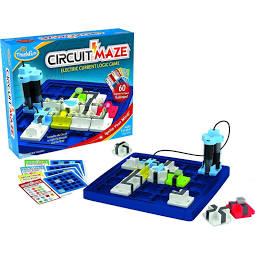
There are a number of toys on Simon H’s newer list that come right after my Critical Link heart. Take the Little Bits Electronics Gizmos & Gadgets Kit, which lets kids build their own devices. I’ve been very happy icircuit-maze-boardn my career to be able to build the grown up versions, but this looks like a good hands-on toy. For the same reasons, I like the Circuit Maze Board Game, a “puzzle game [that] teaches your kids all about how circuits and electricity work.” Then there’s the Kano Computer Kit, which is brightly colored – so aimed at younger kids – but includes everything a kid needs to build-their own computer, and do some programming on it once they’re done.  The SAM Labs Science Museum Inventor Kit includes “a light sensor, a buzzer, a tilt sensor, a motor” as well as “guides that encapsulate everything from Morse code to alarm systems.” No wonder I like it.What else is on the Digital Trends list?

There’s the Dino-Lite Digital Microscope that not only lets kids look at things, but lets them capture those things in photos and videos.  The CogniToys Dino is a talking dinosaur. And a pretty smart one at that: it uses IBM Watson. Marbotic offers Smart Numbers and Smart Letters that tie actual wooden numbers and letters to a tablet that lets the kids know if they’ve got it right. Good old Fisher Price makes the list with the Code-a-Pillar, a robotic caterpillar made up of sections that do something when put together in the right order. Sounds like coding to me!

The final tech toy on the list is a set of Kidz Gear Volume Limit Headphones that lets your kids pick whatever tunes they want for the road trip. You don’t have to listen, and you don’t have to worry about whether the kids are blasting the music and harming their hearing.

Lots of fun tech toys out there, that’s for sure. May not make me want to be 10 again. As I said, these days I get to play with this stuff for real. But it does kind of make me wish that I still had a kid around who’s that age.